

Reformer Pilates vs. Mat Pilates – Which Suits You Best?
 Mihaela FitzpatrickSeptember 11, 20252 Mins read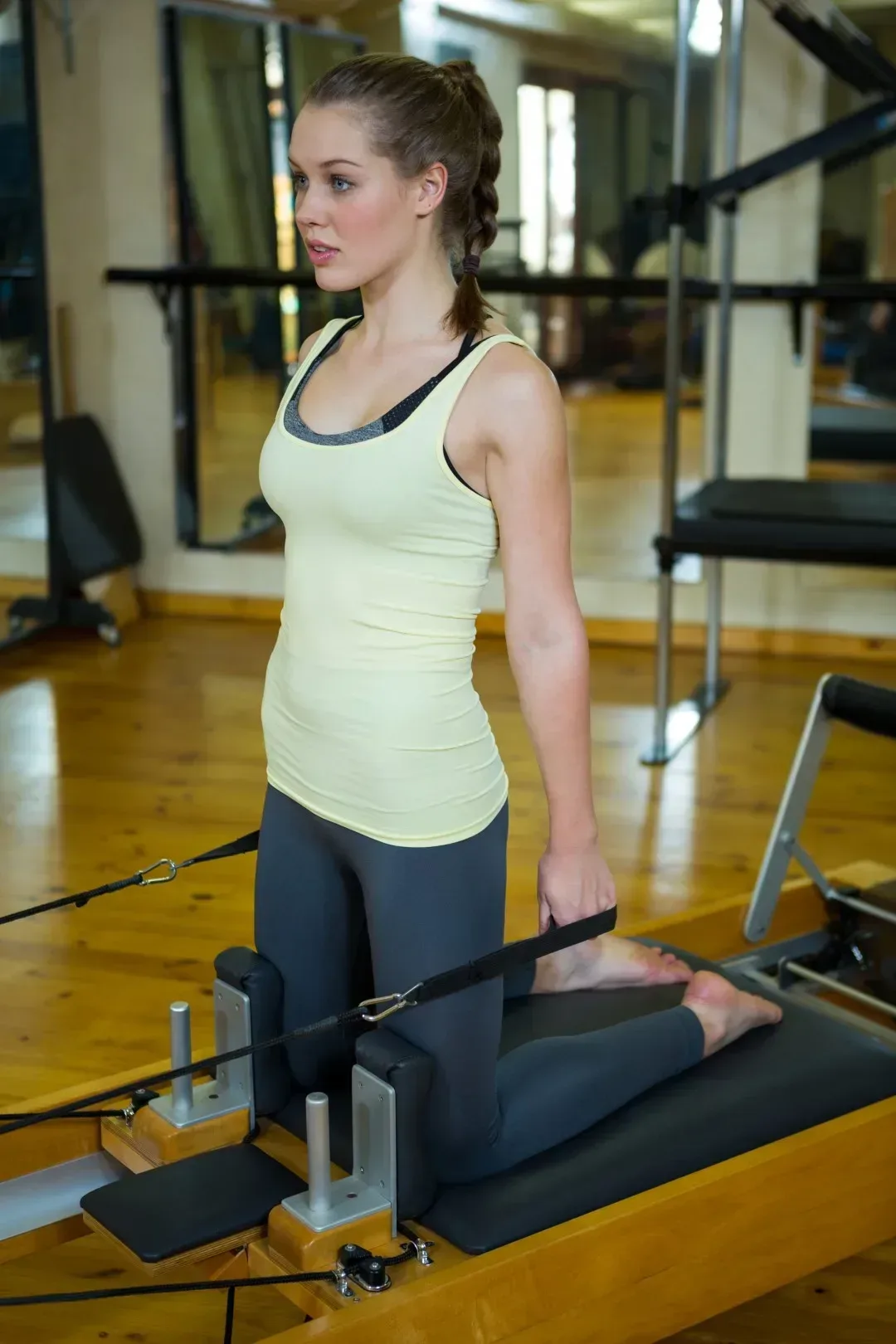
Pilates is an innovative form of exercise created by Joseph Pilates, designed to improve the body’s strength, flexibility and balance. Today, the most popular forms are Mat Pilates and Reformer Pilates, each with its own benefits and unique characteristics.
Although both follow the same basic principles — control, concentration, breathing, precision and balance — the experience of practising them is different, and the right choice depends on each person’s goals and needs.
1. What is Mat Pilates?
Mat Pilates is the classic version, practised on a mat. It is accessible, easy to learn and ideal for beginners. Small props such as balls, rings or resistance bands are sometimes used to add variety.
Advantages:
- Accessibility: it can be practised anywhere, without special equipment.
- Low cost: no large investment is required.
- Improves posture and balance: it helps with body awareness and correcting posture.
- Flexibility and mobility: the exercises support fluid movement and a more supple body.
Limitations:
- It uses only body weight, which can limit progress for those looking for more resistance.
- The variety of exercises is more restricted compared with Reformer Pilates.
2. What is Reformer Pilates?
Reformer Pilates uses a special apparatus with sliding platforms, springs, straps and adjustable supports. This equipment adds resistance and support, offering a more complex experience.
Advantages:
- Variable resistance: the intensity can be adjusted according to your fitness level.
- Diverse exercises: it allows you to work different muscle groups and at varied angles.
- Additional support: ideal for people in medical recovery or with reduced mobility.
- Faster results: strength and muscle tone develop more quickly thanks to the resistance the machine provides.
Limitations:
- Higher cost and limited access to specialised studios.
- It requires the guidance of an instructor, especially at the beginning.
3. Direct comparison
| Mat Pilates | Reformer Pilates | |
|---|---|---|
| Equipment | Only a mat and small props | Specialised apparatus with springs and platforms |
| Accessibility | Can be practised anywhere | Requires a specialised studio |
| Cost | Low | High |
| Resistance | Body weight | Adjustable, adapted to your progress |
| Variety | Limited exercises | Wide range of movements |
| Suitable for | Beginners, practice at home | Advanced practitioners, rehabilitation, intensive toning |
4. How do you choose the right option?
- If you are a beginner: start with Mat Pilates to learn the basic principles and increase your body awareness.
- If you want fast results or need rehabilitation: Reformer Pilates is the ideal choice thanks to the resistance and support it offers.
- For long-term progress: combine the two types of practice. Mat Pilates gives you the foundation, while the Reformer allows you to progress and diversify your training.
5. Conclusion
Both Mat Pilates and Reformer Pilates are excellent forms of training. The choice does not depend on which is better in general, but on what suits you according to your goals, fitness level and resources.
- Choose Mat Pilates for simplicity, accessibility and the fundamentals of movement.
- Choose Reformer Pilates if you want more intensity, variety and support for recovery or performance.
Whichever you choose, Pilates is an investment in your health, offering long-term benefits for body and mind.
Source: Comparative article published in Shape Magazine – “Mat Pilates vs. Reformer Pilates — Which Is Better?”, updated November 2024
(https://www.shape.com/mat-pilates-vs-reformer-pilates-6754499)
















Related Articles
The AI-Powered Fitness Revolution
Once limited to bulky treadmills and laminated workout plans, the fitness industry...
5 Benefits of Resistance Bands That Will Turn You from Sceptic to Believer
After training at home for several months during the coronavirus pandemic, we...

Walking: Slim Your Waist and Improve Your Health
Physical activity does not have to be complicated. A simple habit, such...


Fitness: The Main Trends for 2026
For the 20th consecutive year, the American College of Sports Medicine (ACSM)...

Leave a comment