

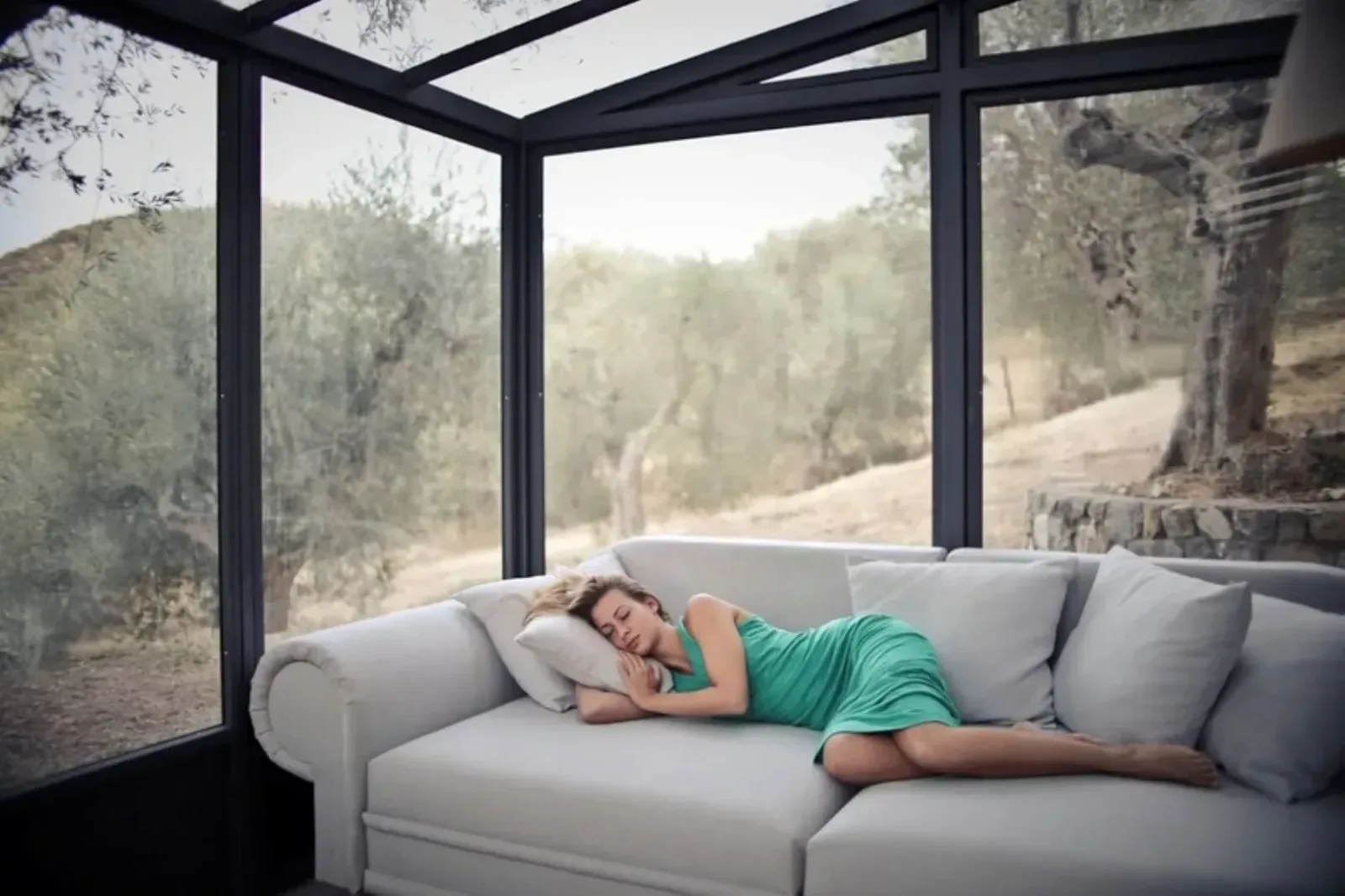
There are few things more frustrating than sleep anxiety. It is 10 p.m. You are enjoying your evening skincare routine. You make a cup of chamomile tea. You put on something silky. But then, suddenly, it appears: that fear that you will not be able to fall asleep and reach the world of dreams, that sleep anxiety that will keep you awake for hours, scrolling the internet in an act of revenge bedtime procrastination. The more you think about this bedtime scenario, the more anxious you become. The vicious cycle of sleep anxiety has begun.
Is it an illness?
Sleep anxiety is very real, but it is not necessarily an official disorder as such. “In the sleep universe, we do not really diagnose anyone with sleep anxiety,” says clinical psychologist Michael Breus, PhD, a diplomate of the American Board of Sleep Medicine and a fellow of the American Academy of Sleep Medicine. “We diagnose them with insomnia, or insomnia secondary to a particular anxiety disorder, such as generalised anxiety or OCD. There are no real criteria or definitions, so doctors tend not to use it as a diagnosis.”
Nevertheless, “every sleep doctor in the universe” knows the role anxiety can play in sleep problems, says Dr Breus. “Of most people who do not sleep, 75% of them are down to anxiety. The other 25% are a combination of environmental factors, medication, certain medical conditions or, in some cases, certain forms of depression.”
How serious is sleep anxiety?
The fact that sleep anxiety is not a formally defined condition does not mean that night-time anxiety is not affecting your health. “Mood, anxiety and depression have a bidirectional relationship with sleep,” says Rebecca Robbins, PhD, an instructor in medicine at Harvard Medical School and sleep expert at the smart ring maker Oura. Stress and anxiety, in other words, disrupt your sleep. And when we are sleep-deprived, we are more likely to experience “negative moods” such as anxiety and depression, Dr Robbins explains.
So how can you prevent sleep anxiety, and how do you treat it when it appears?
“Sleep anxiety is stress or worry relating to your ability to fall asleep or stay asleep,” says Dr Robbins. It can be triggered by stress about an alarm clock going off early and the fear of not waking up, the memory of a terrible night’s sleep earlier in the same week, or perhaps by nothing at all. “Anxiety can manifest through physical, cognitive or behavioural symptoms,” says neurologist Pedram Navab, DO, a sleep medicine specialist and author of “Sleep Reimagined: The Fast Track to a Revitalized Life”. “You can have a rapid pulse or rapid breathing, as if you were having a panic attack, or you can try to avoid bed so you can reduce the anxiety of not being able to fall asleep or stay asleep.”
You may not receive a formal diagnosis for sleep anxiety, but “those who suffer from it probably know they have it,” says Sanem Hafeez, PhD, a neuropsychologist and professor at Columbia University. (Sleep disorders are diagnosed through an overnight stay in a sleep laboratory, where clinicians can measure breathing, heart rate and sleep stages. “Mentally, a psychologist will do an intake to find out what happens before you fall asleep, the thoughts you have and what happens if you wake during the night, in addition to your sleep habits,” Dr Hafeez explains.)
Sleep anxiety is not the same as an actual fear of sleep. “Somniphobia is when people believe something terrible will happen while they sleep, or that they have to stay awake and vigilant,” says Dr Hafeez.
How many people suffer from sleep anxiety?
Who is most likely to have sleep anxiety? Because lack of sleep and anxiety feed each other, you are likely to have sleep anxiety if you have generalised anxiety. “Lack of sleep affects the frontal lobe of the brain, which is involved in executive function, decision-making and problem-solving,” says Dr Navab. “When that area is not working at its optimal capacity, thought processes become irrational.”
Being aware that this is a common condition is very important. It reduces feelings of guilt and helps us understand the consequences of a stressful, crowded lifestyle in which we do not place enough emphasis on wellness.
In the next article we will find out how we can treat sleep anxiety and what the most common methods for falling asleep are. Follow our social media pages to see when we post it.
Source: Glamour















Related Articles

The AI-Powered Fitness Revolution
Once limited to bulky treadmills and laminated workout plans, the fitness industry...

What to Wear Hiking in Spring
As winter’s cold grip begins to loosen and the world comes alive...
7 Ways Wearable Technology Can Help You Reach Your Health Goals
Whether you are motivated to improve your health, managing a newly diagnosed...



The Effects of Stress on the Body
Stress affects all the body’s systems, including the musculoskeletal, respiratory, cardiovascular, endocrine,...

Leave a comment